Skip to content
PIETAS

Menu

Search

Bag

Your bag is empty.

Free UK delivery on orders over £100, and 30 days to return anything unworn.

Shop the collection
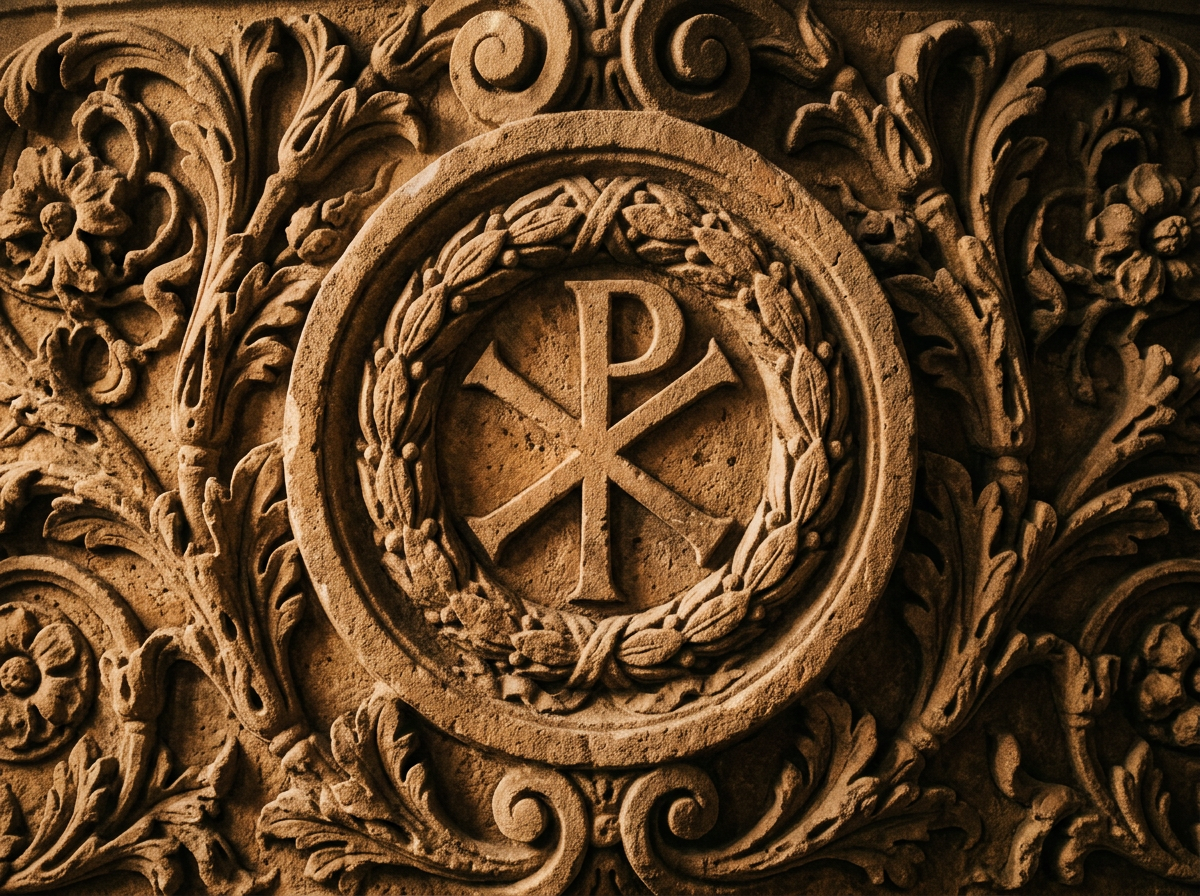
A weathered stone relief of the Chi-Rho symbol inside a wreath, surrounded by carved foliage

A guide to the signs

TheSymbolism.

Every piece we make begins with a sign. Here is what each one means, where it came from, and why it has outlasted empires.

Before the cathedrals

The first Christians could not always speak plainly.

sign, noun. A small thing that says a large thing, to those who know how to read it.

In the early centuries, to name Christ openly could cost you everything. So the faithful learned to say it in signs.

A fish traced on a wall. An anchor cut beside a grave. Two Greek letters on a ring or a lamp. Each mark was small enough to hide and clear enough to be known.

The signs outlived the danger. They moved from catacomb walls to altars, from altars to banners, and for two thousand years they have been the quiet vocabulary of the Church. What follows is a short guide to reading it.

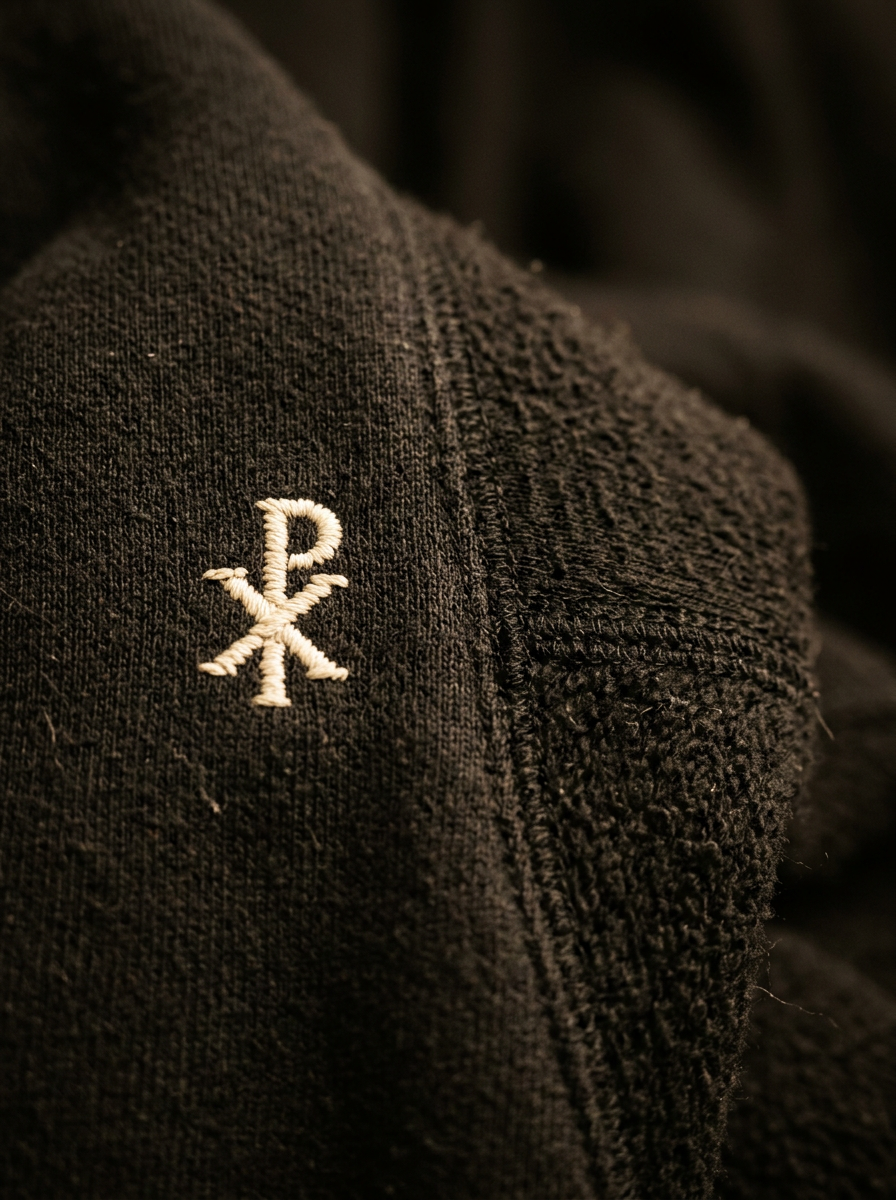
A small Chi-Rho embroidered in cream thread on the shoulder of a black hoodie
The Chi-Rho, embroidered on the Christogram Hoodie.

Two letters, one name

The Chi-Rho

The shortest way to write Christ.

Chi (Χ) and Rho (Ρ) are the first two letters of Χριστός, Christos, the Greek word for Christ. Laid over one another they make a single mark, small enough to cut into stone in a few strokes.

The sign belongs above all to the fourth century. Before the Battle of the Milvian Bridge in 312, the writer Lactantius tells us, Constantine had his soldiers mark their shields with the sign of Christ. A later account by Eusebius describes the labarum, an imperial standard crowned with the Chi-Rho. Within a generation it was on coins, on sarcophagi and on the walls of the catacombs.

“In hoc signo vinces. In this sign, conquer.”
The words tradition gives to Constantine’s vision
The first and the last letters of the Greek alphabet.

The first and the last

Alpha & Omega

Everything between the first letter and the last.

Alpha (Α) and Omega (Ω) open and close the Greek alphabet. In the Book of Revelation, Christ takes them as His own name: the beginning and the end, and everything held between.

Early Christians cut the pair on either side of the Chi-Rho, on catacomb walls and on sarcophagi, so the whole sign read like a sentence: Christ, the first and the last.

It is why our first collection is called Alpha. We wanted to begin where the Church begins, and trust the rest to follow.

“I am the Alpha and the Omega, the first and the last, the beginning and the end.”

Revelation 22:13
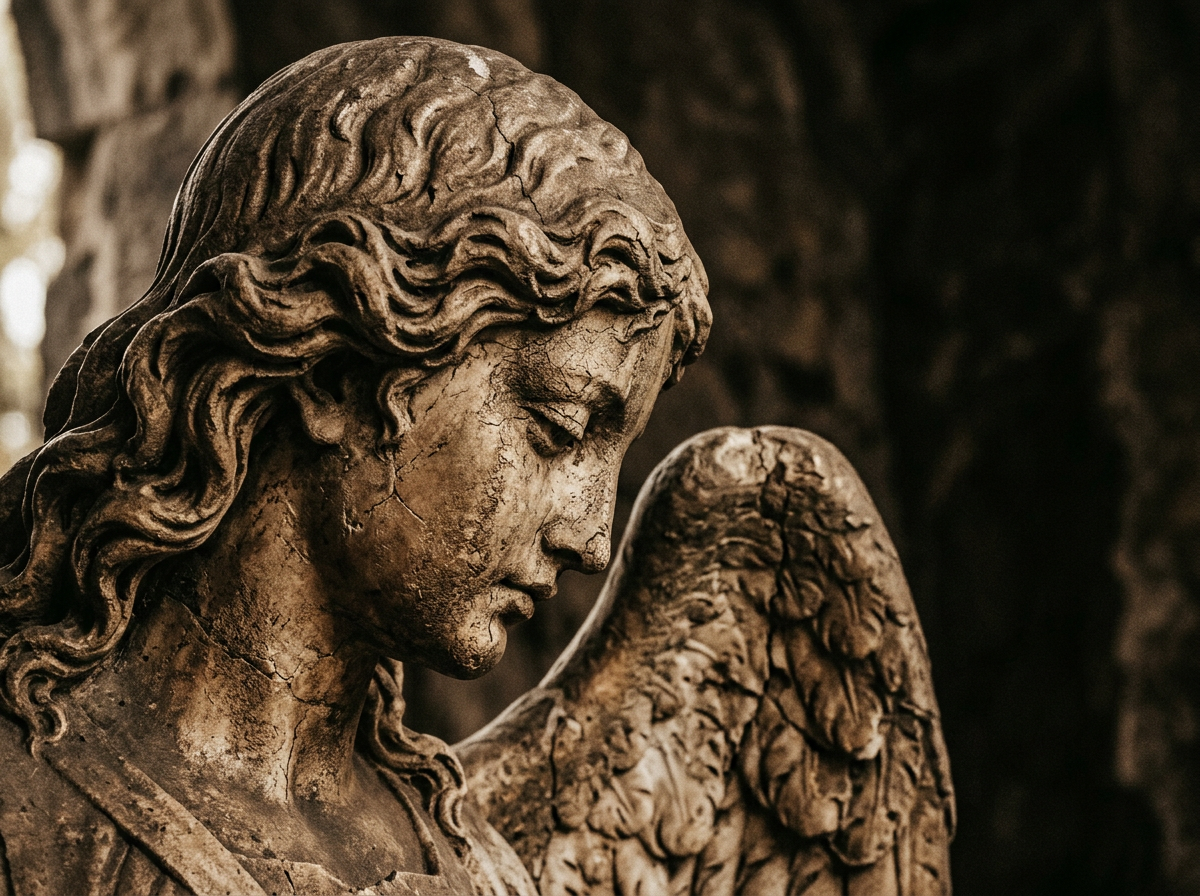
Close view of a weathered stone angel with its head bowed and a feathered wing
Humility is the answer the question asks for.

A name that is a question

Quis ut Deus

Who is like God?

Quis ut Deus is Latin for “Who is like God?” It is the meaning of the Hebrew name Michael, and a question with only one answer.

In Revelation, war breaks out in heaven and Michael and his angels fight the dragon. Tradition gives his name as the cry of that battle: not a boast but a refusal. No one is like God, so no creature can stand in His place.

The words have been carved on altars and struck on medals for centuries. They are a reminder, said quietly, against pride.

“And war broke out in heaven, Michael and his angels fighting against the dragon.”

Revelation 12:7
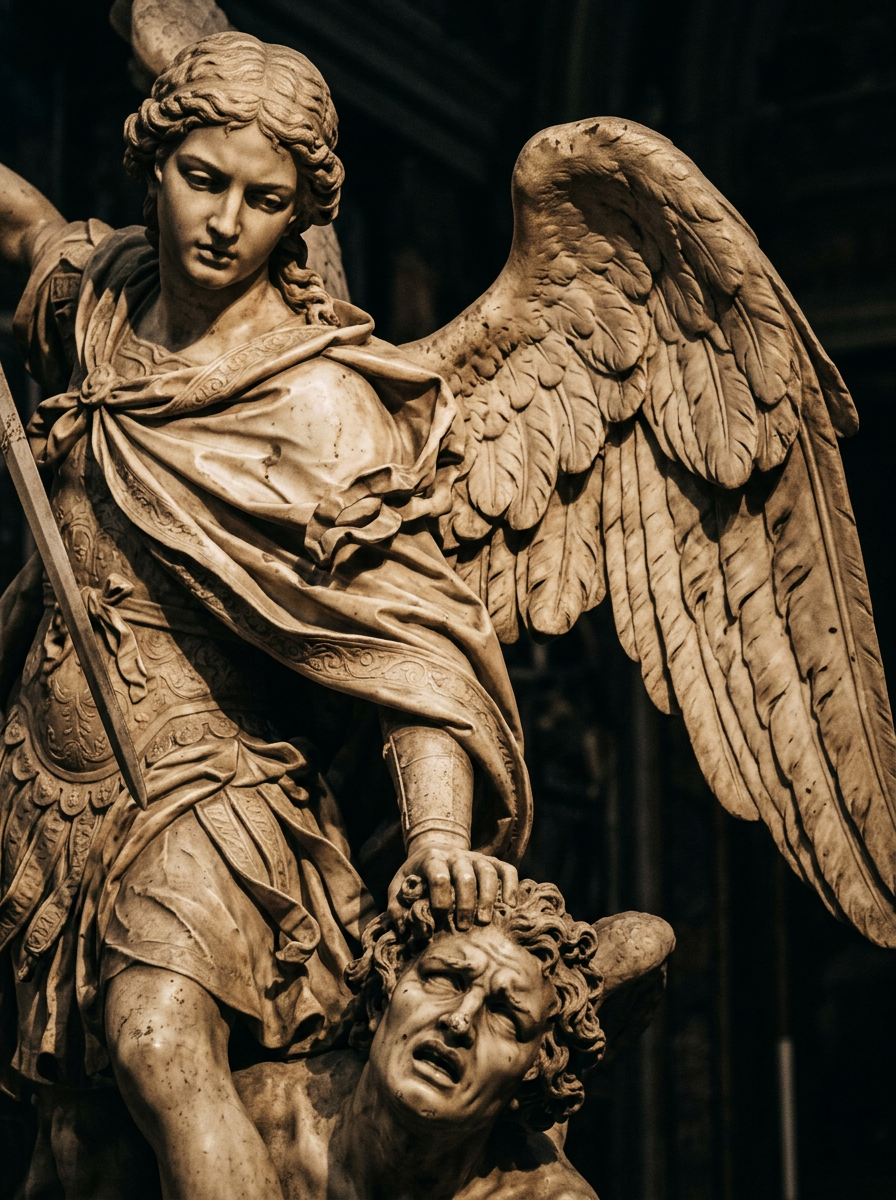
A marble sculpture of Saint Michael standing over a fallen devil, one great wing raised in a dark cathedral
Saint Michael, carved in marble.

The defender

Saint Michael

Sword raised, face calm.

Michael appears by name in Daniel, in the Letter of Jude and in Revelation, always as the one who stands between the faithful and what would harm them. The Church has called him prince of the heavenly host and protector of those who keep watch.

Sculptors and painters almost always give him the same pose: sword lifted, an enemy beneath his foot, and the face of the angel perfectly calm. Evil is put down without anger.

Catholics have prayed to him for well over a century in a short prayer written in the 1880s. It begins, “Saint Michael the Archangel, defend us in battle.”

“At that time shall arise Michael, the great prince who has charge of your people.”

Daniel 12:1

V — Smaller signs

Six more you will meet.

Walk through any old church and you will find them on the doors, the floors and the stones. A short key to the ones you are most likely to see.

The FishΙΧΘΥΣ

Greek for “fish,” and an acrostic: Iēsous Christos Theou Yios Sōtēr. Jesus Christ, Son of God, Savior.

Early Christian acrostic

The AnchorAncora

Hope, held fast. Cut into catacomb tombs as a quiet way of saying the dead were not lost.

Hebrews 6:19

The WreathCorona

Rome crowned its victors with laurel. The Church gave the crown to its martyrs, those who finished the race.

2 Timothy 4:7–8

The DoveColumba

The Spirit descending at the baptism of Christ, and the dove that returned to Noah with an olive branch: peace after the flood.

Matthew 3:16 · Genesis 8:11

The LambAgnus Dei

Christ as the sacrifice given for others. The lamb is nearly always shown carrying a banner of victory.

John 1:29

The MonogramΙΗΣ

The first three letters of Jesus in Greek. Medieval writers later read it as Latin, Iesus Hominum Salvator: Jesus, Savior of Men.

The Christogram

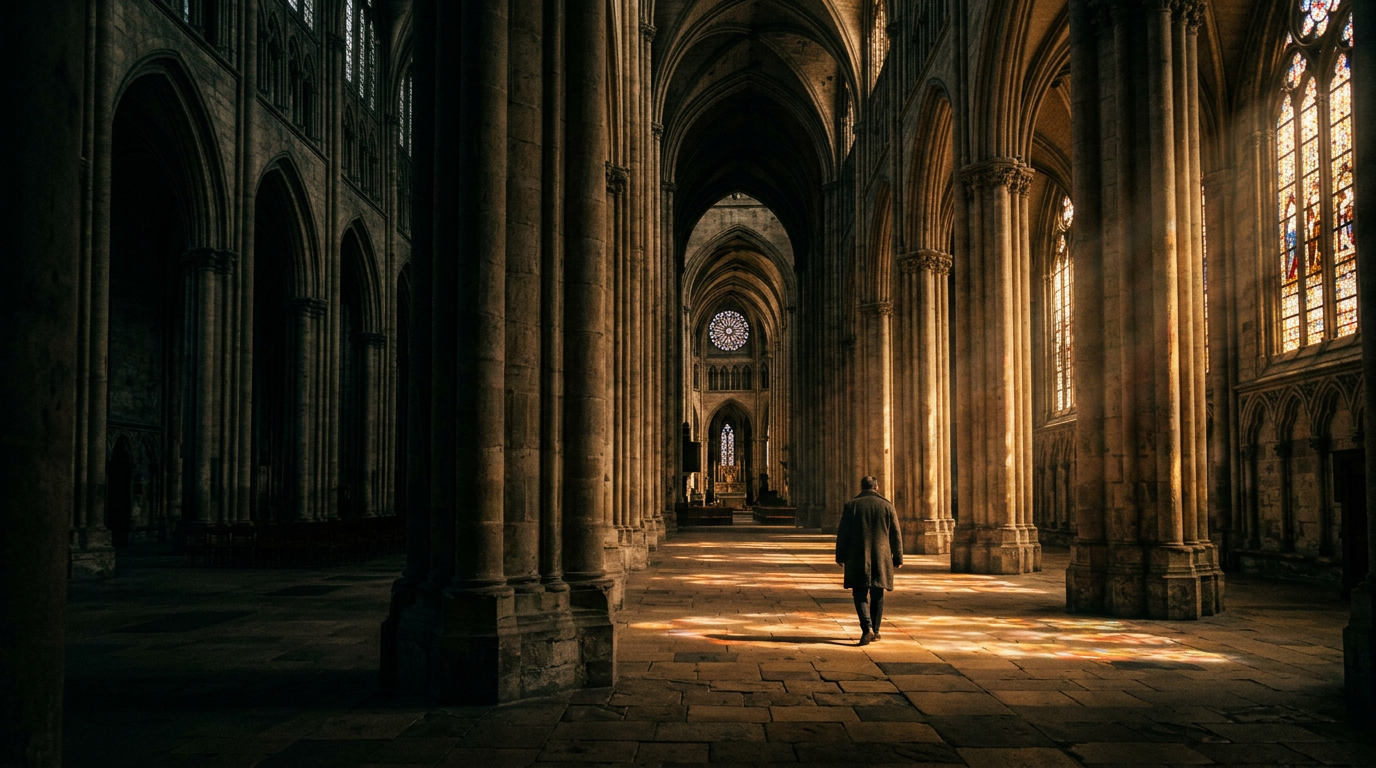
A lone man in a long coat walks through a vast Gothic cathedral, light from the stained glass falling across the stone floor

Carry the sign

Wear what the Church has always carried.

Each piece in the Alpha collection takes one of these signs out of the cathedral and into ordinary life.

The next edition

Be part of the journey.

Early access to new editions.