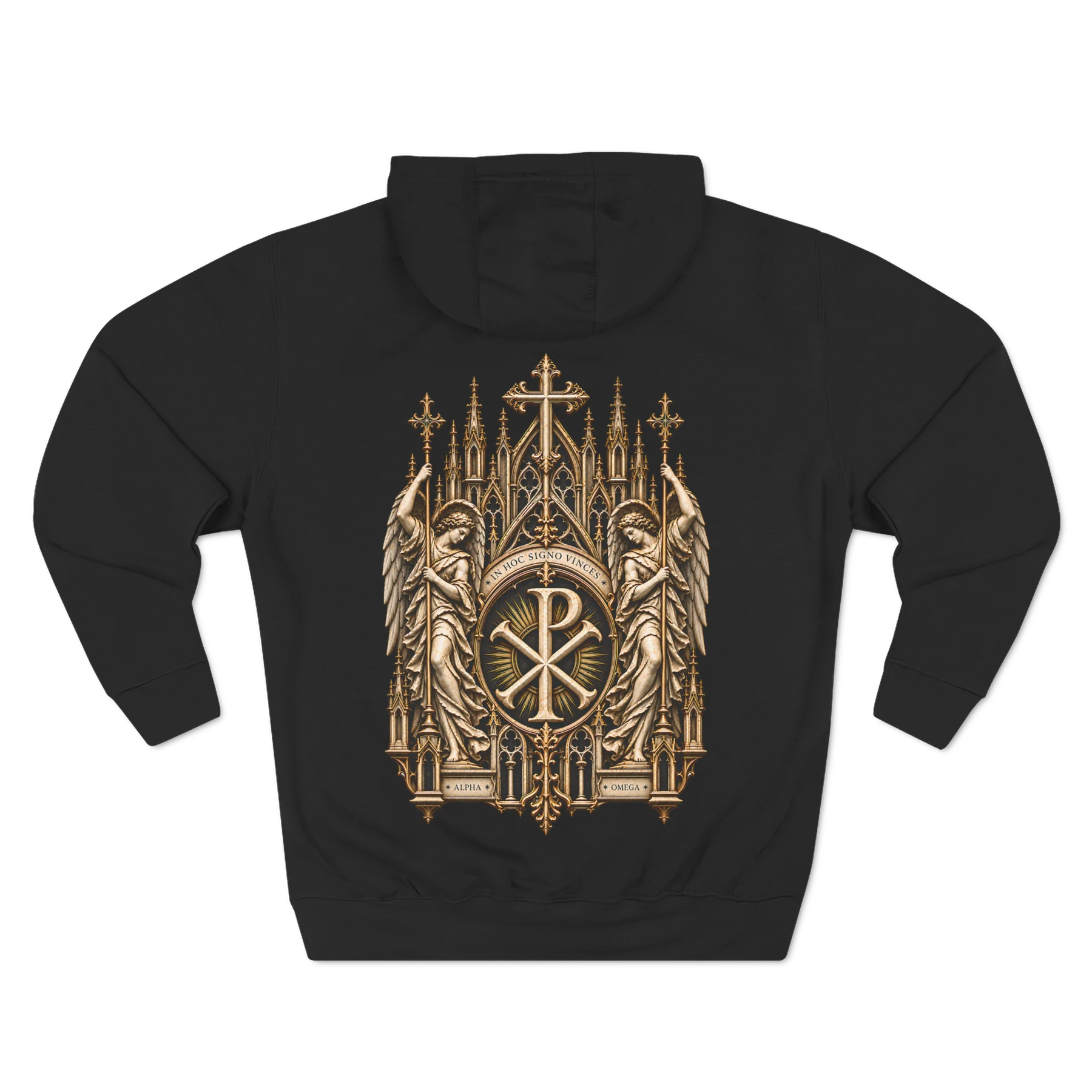
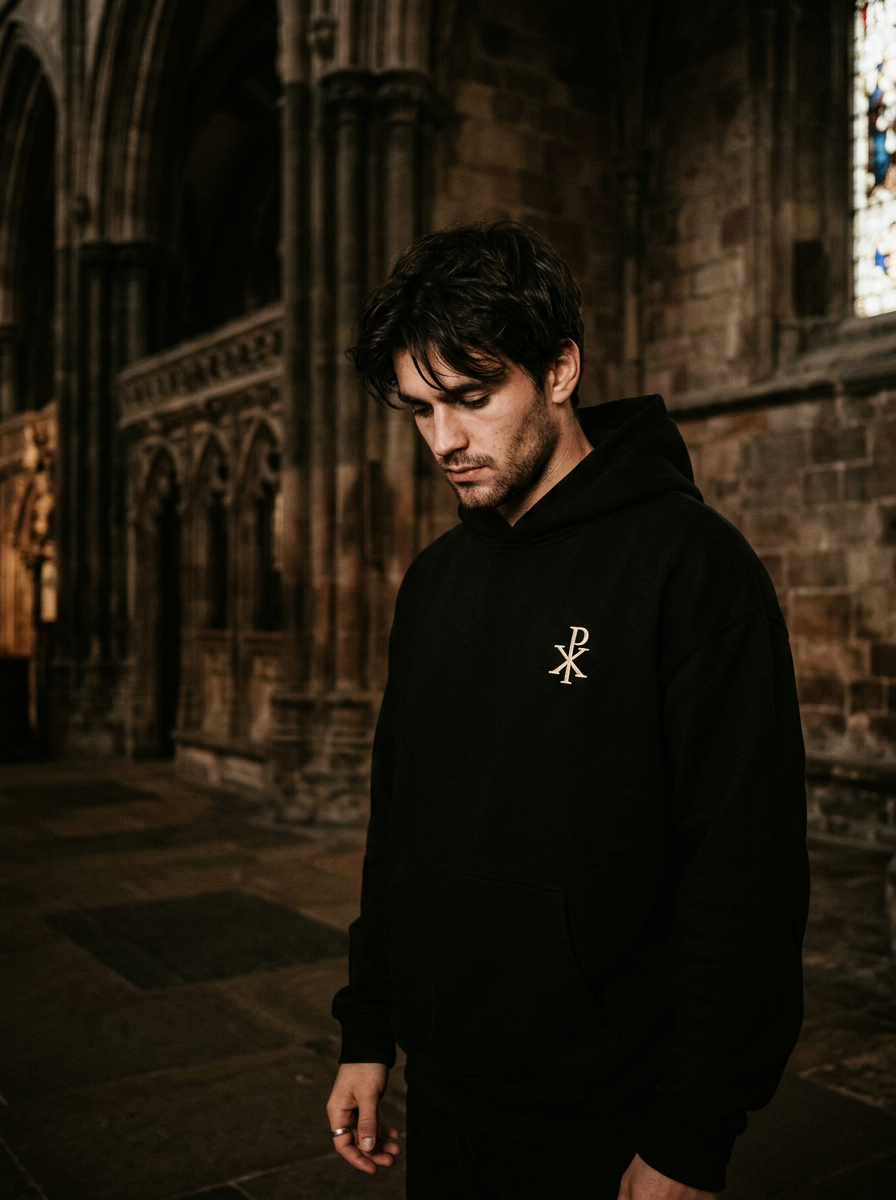
The Christogram Hoodie
£85
Black
By PIETAS2 min read
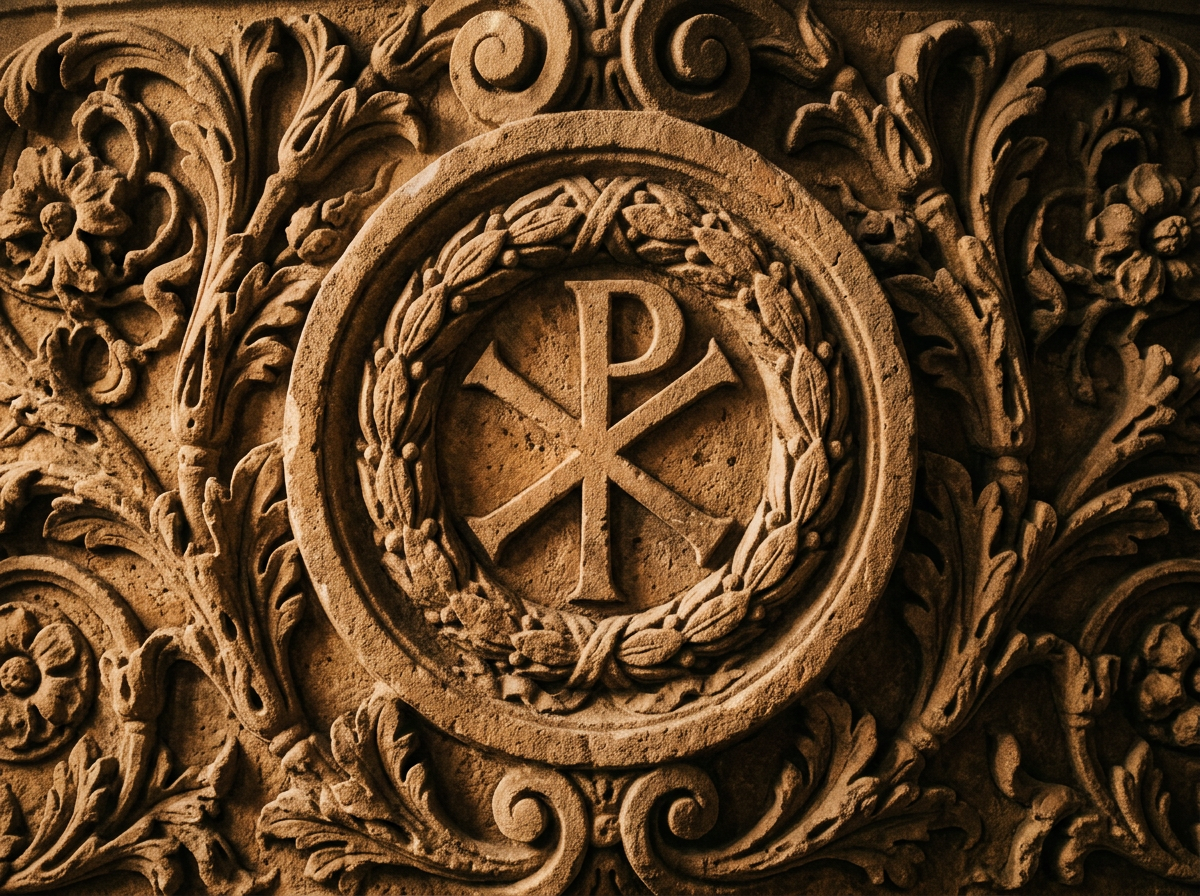
The Chi-Rho is made from two letters. Chi (Χ) and rho (Ρ) are the first two letters of ΧΡΙΣΤΟΣ, Christos, the Greek word for "anointed", which English renders as Christ. Set one over the other, they form a single mark: an upright stroke with a loop at its head, crossed through the middle.
It is also called a Christogram, a name for any monogram built from the letters of Christ's title. Of all of them, the Chi-Rho is the oldest and the most widely carved.
The mark did not begin with an emperor. Early Christian scribes abbreviated sacred names when they copied Scripture, and the letters chi and rho begin to appear together in Christian contexts from around the third century. Because the sign is just two letters, it could be scratched into plaster, carved on a tomb or stamped on a lamp by anyone who knew what it meant.
The Chi-Rho is best known through the emperor Constantine. On the eve of the battle of the Milvian Bridge outside Rome in 312, he is said to have been told, in a dream or a vision, to mark his soldiers' shields with the sign of Christ. The two ancient writers who tell the story, Lactantius and Eusebius, do not agree on the details, and historians still argue about them.
What followed is not in dispute. Constantine won the battle, and the Chi-Rho was carried into the field on the labarum, the imperial military standard: a banner hung from a crossbar on a long spear, with the monogram at its head. A sign once scratched on catacomb walls was now carried at the front of an army.
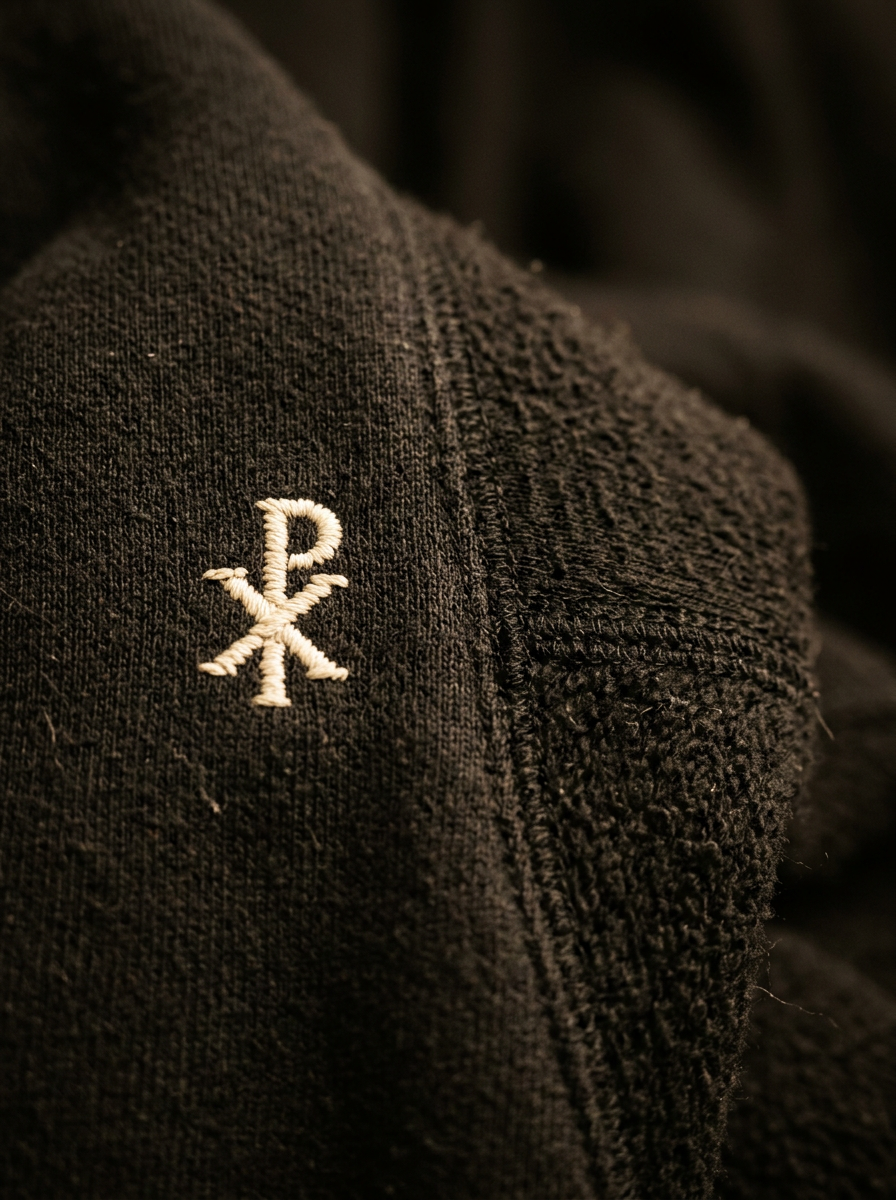
A good symbol survives being drawn badly. The Chi-Rho does. It reads at the size of a coin and at the size of a church door, and it holds up carved, embroidered or printed. To a stranger it looks like a monogram. To anyone who knows it, it says everything.
That quiet legibility is why it sits at the centre of what we make. You can see it on The Christogram Hoodie and The Christogram Hat, and we look at the mark itself in The symbol.
For the other signs that run through our pieces, start with our guide to Symbolism.
From the Alpha collection
£85
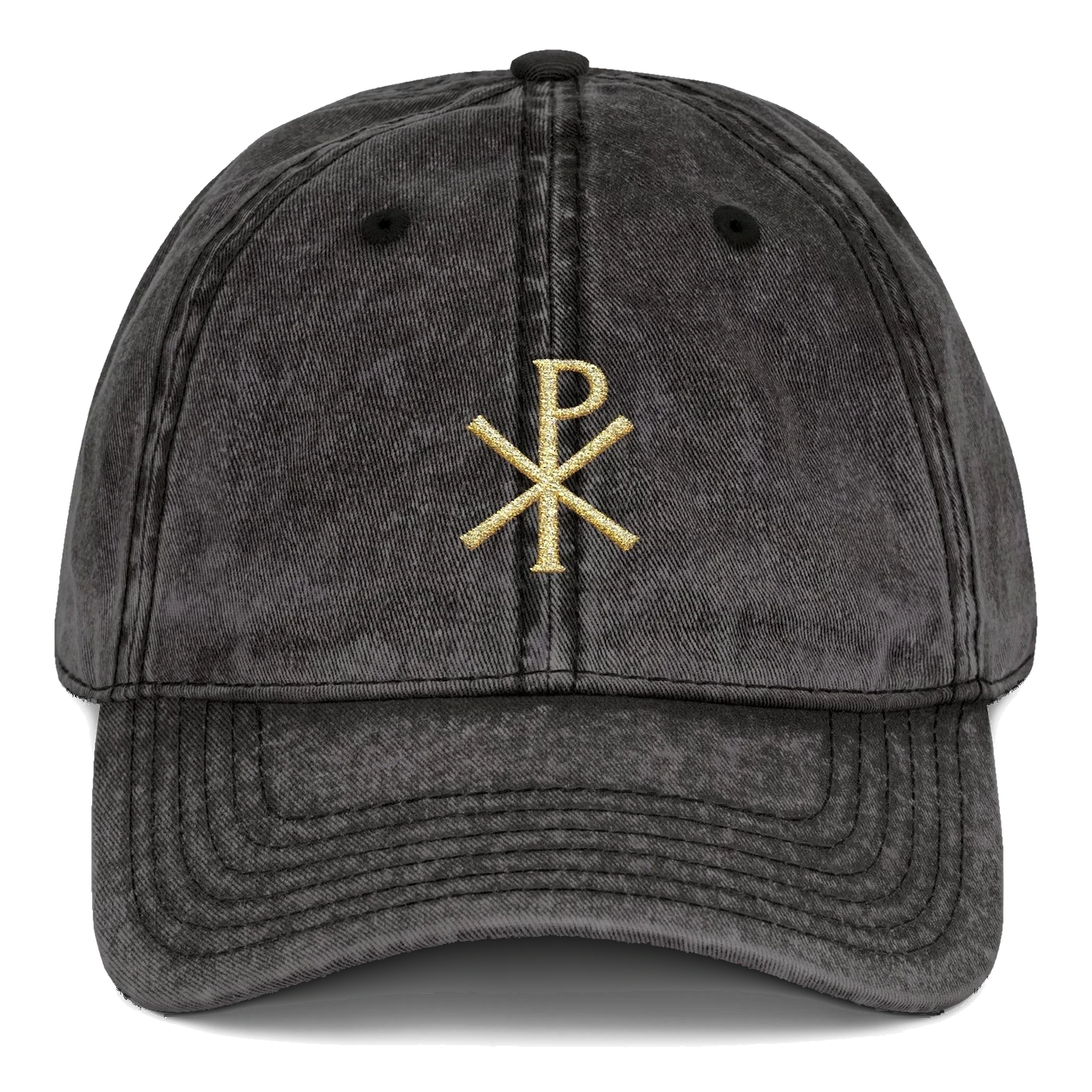
£40
The Journal
Symbols
Alpha and Omega are the first and last letters of the Greek alphabet. What the phrase means in Revelation, and why early Christians carved it beside the Chi-Rho.
2 min read
Symbols
Quis ut Deus is Latin for "Who is like God?", the meaning of the name Michael. Why it is a question, not a boast, and why it is written under Saint Michael.
2 min read
Style
Christian streetwear does not have to shout. Four principles for wearing faith with restraint: symbols over slogans, one signal per piece, and clothes made to last.
2 min read
The next edition
Early access to new editions.